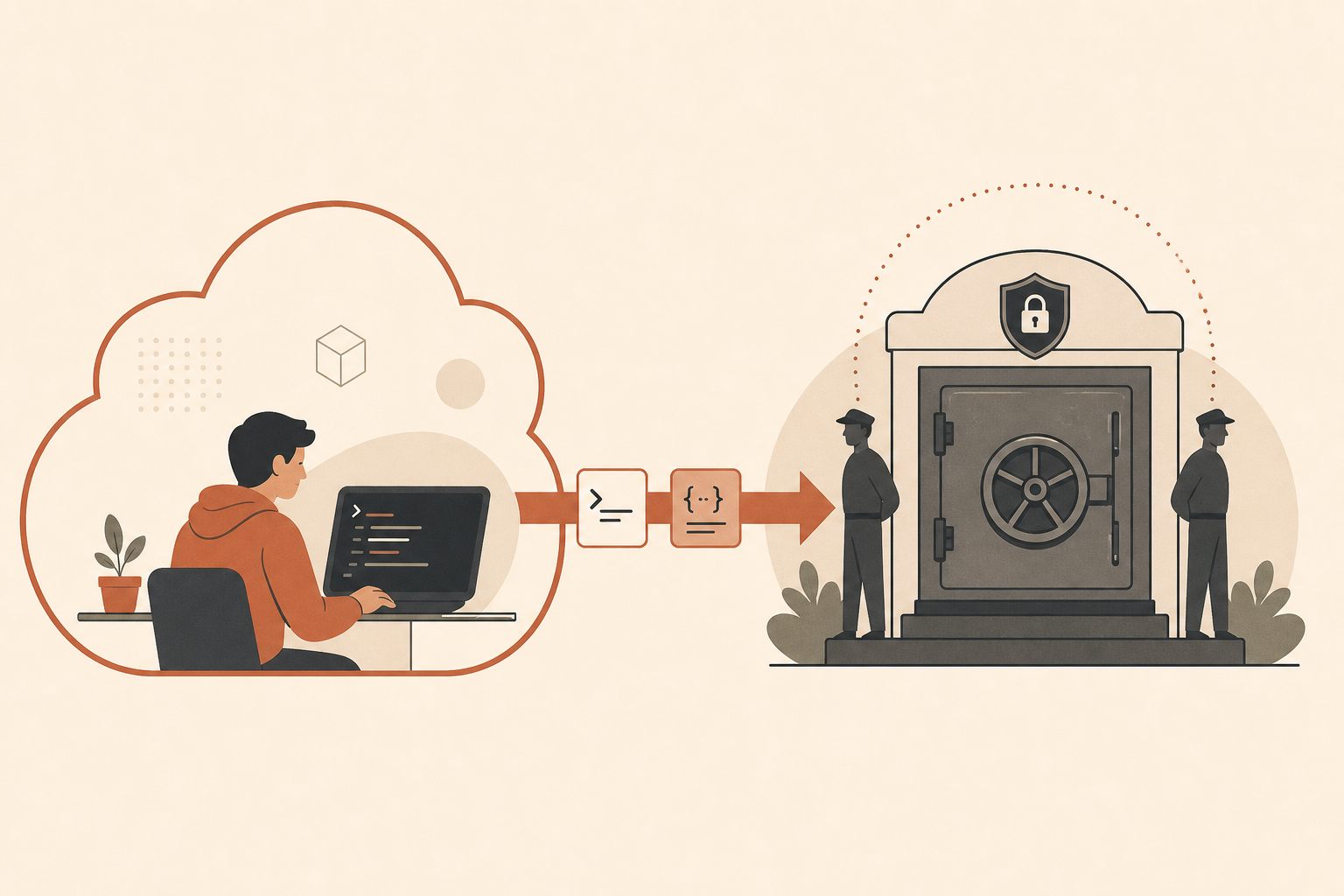
On June 9, AWS shipped Claude Fable 5 on Amazon Bedrock and buried the real enterprise story in one sentence: before you can invoke it, you must opt into provider_data_share, and once you do, your data leaves AWS’s data and security boundary (AWS).
That is not a small configuration toggle. It changes the contract many teams thought they were buying when they picked Bedrock.
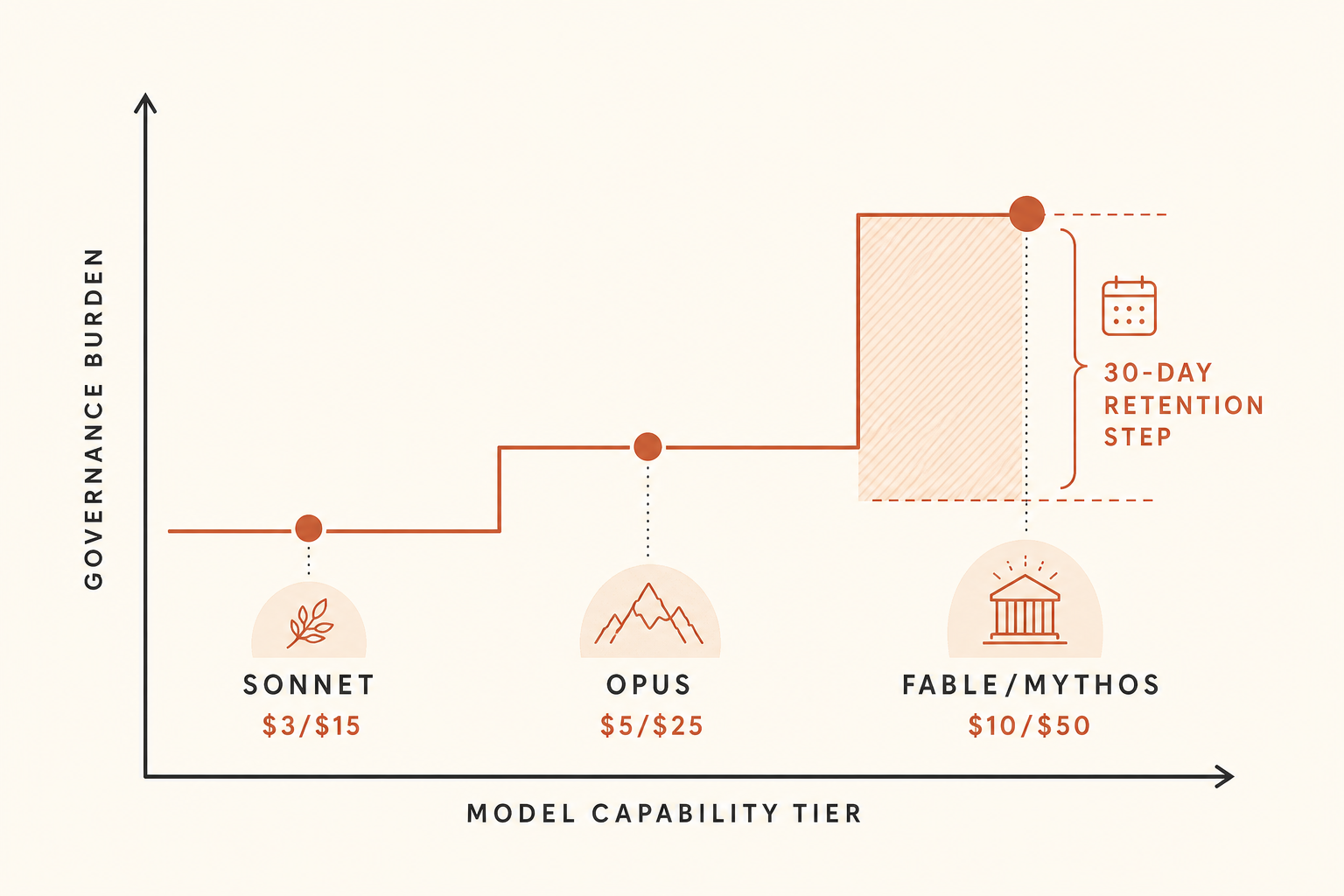
Anthropic’s pitch is clear enough. Fable 5 is the public, safeguarded version of its new Mythos-class capability tier. It is priced at $10 per million input tokens and $50 per million output tokens, twice the current Opus 4.8 API rate, and Anthropic says the model is built for long-running software engineering, knowledge work, vision, and agentic workflows (Anthropic, Claude pricing docs). But the price that matters most for serious companies is not the token price. It is the governance price.
As of June 17, there is one more wrinkle: Anthropic says access to Fable 5 and Mythos 5 was suspended on June 12 after a U.S. government export-control directive, while all other Claude models remain unaffected (Anthropic). That suspension may be temporary, but the governance pattern is not. This is the shape of frontier model access now: more capability, more monitoring, fewer simple privacy promises.
The Fine Print That Changes the Architecture
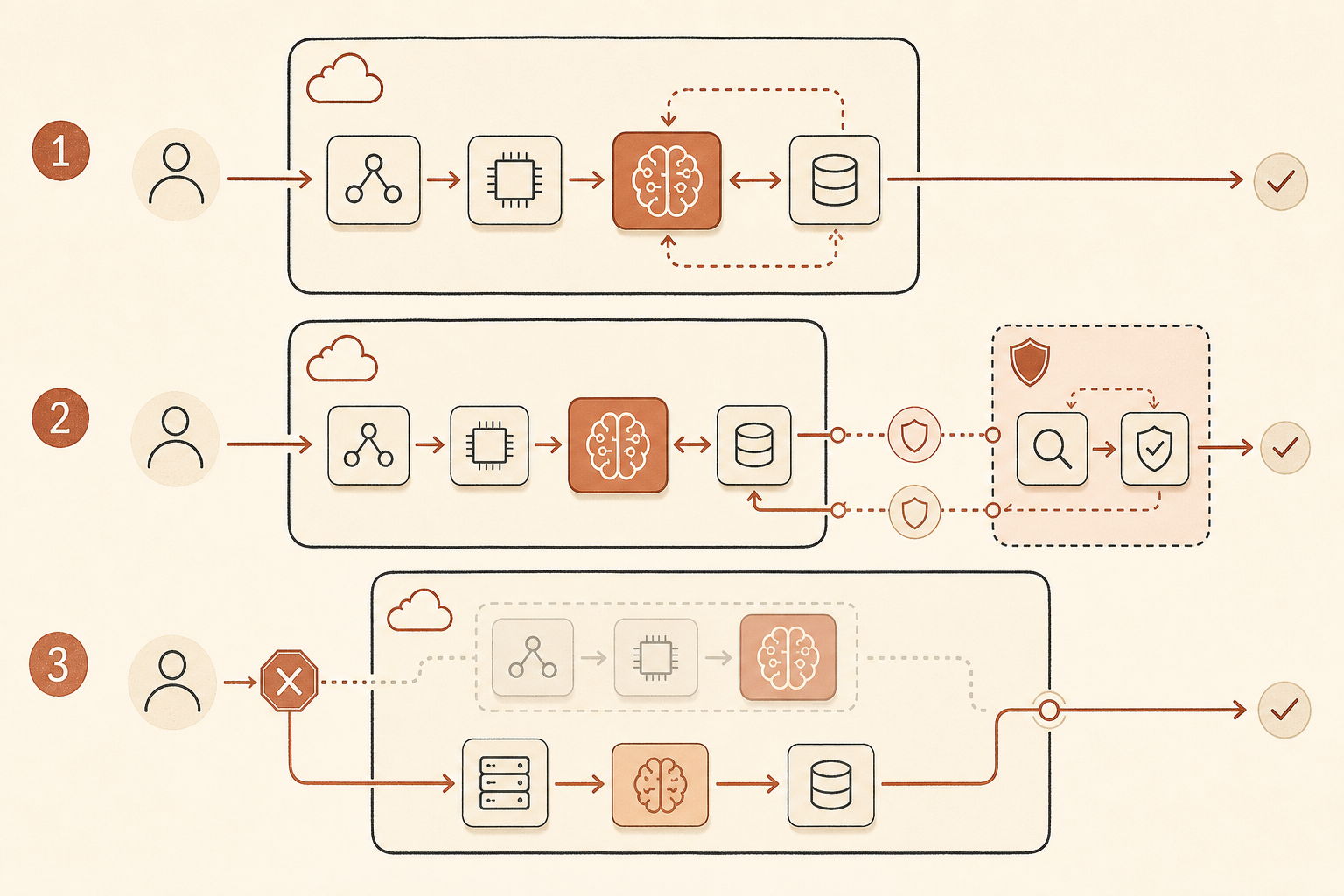
AWS’s launch post says Claude Fable 5 is available on Bedrock in US East, Northern Virginia, and Europe, Stockholm. It also says there is no console UI for the new data-retention setting at launch. You must call the Data Retention API before invoking the model.
The launch post gives the shape of the switch:
curl -X PUT https://bedrock.us-east-1.amazonaws.com/data-retention \
  -H "Authorization: Bearer <your_bearer_token>" \
  -H "Content-Type: application/json" \
  -d '{ "mode": "provider_data_share" }'
AWS then spells out what that mode means: Bedrock can retain and share inference data with model providers according to their requirements; for Anthropic Fable 5, those requirements include 30-day retention of inputs and outputs plus potential human review (AWS).
That breaks the mental model many platform teams had:
| Route | Default expectation | Fable 5 reality |
|---|---|---|
| Bedrock with most models | Inputs/outputs not stored by default | Not enough for Fable 5 |
| Bedrock Fable 5 | AWS-hosted access to Anthropic model | Must opt into provider data sharing |
| Claude API with ZDR | No prompt/output retention for eligible APIs | Fable 5 and Mythos 5 are not ZDR-eligible |
| Older Claude models | Existing retention settings continue | Unaffected by Covered Model policy |
AWS’s own Bedrock abuse-detection docs still say Bedrock uses zero operator access and zero data retention by default. Then they list exceptions. For Claude Fable 5, inputs and outputs are retained for up to 30 days, and use requires opting into sharing retained traffic with Anthropic for abuse detection and possible human review (AWS docs).
That “exception” is the product.
Why Anthropic Wants the Data
Anthropic’s argument is not nonsense. It says Mythos-class models cross capability thresholds where misuse may only be visible across many requests. A single prompt might look benign. A pattern of prompts may look like jailbreak search, distillation, state-sponsored activity, or data extortion. Anthropic specifically cites multi-request attacks such as Best-of-N jailbreaking and says temporary retention lets its safeguards “zoom out” across requests (Anthropic support).
The company also says retained data is not used to train new Claude models, and that human access is limited to flagged serious-harm cases or written customer requests. Reviewers, according to Anthropic, use tooling that prevents export, copying, or downloading, with access recorded in tamper-proof logs. After 30 days, data is deleted unless tied to a safety investigation or legal requirement (Anthropic support).
That is a coherent safety design. It is also a weaker enterprise boundary than “your prompts and outputs are not retained.”
Both things can be true. Developers often talk about this as if one side must be lying. That is the wrong frame. The better frame is: Anthropic’s safety system needs observability, and enterprise governance often treats observability over sensitive prompts as a new processor, new retention store, and new review surface.
If you run a coding agent over a regulated codebase, your “prompt” is not a chat message. It can include source files, stack traces, secrets accidentally printed to logs, customer records embedded in fixtures, vulnerability reports, database schemas, internal URLs, IAM policy fragments, and tool outputs from MCP servers. A 30-day retained transcript is not abstract. It is a temporary copy of your engineering environment.
The Community Reaction Was Predictable, and Mostly Right
The Hacker News thread went straight to the point. The submission highlighted AWS’s line that opting into retention means data leaves AWS’s boundary, and it drew 426 points and 254 comments within days (Hacker News). The debate was not “is Fable smart?” It was “what was Bedrock for, if not this boundary?”
One HN commenter framed the core enterprise pain: these models become unusable in settings where contracts limit who can receive customer data. Another said there is little reason to use Bedrock unless you care about data-sharing limits. That is a bit overstated, Bedrock also gives IAM integration, billing, service controls, and AWS-native operations, but it captures the buying motive for a lot of AI platform teams.
The same theme showed up in r/aws, where the post title was blunt: “AWS Bedrock to require sharing data with Anthropic for Mythos and future models.” One commenter said keeping data inside the security boundary was “most of the point” of Bedrock for their org; another called the models unusable for them (Reddit r/aws).
There was also a second, more suspicious thread: if providers retain prompts for 30 days, what stops them from training on them? The factual answer is that Anthropic says it will not use this data to train new Claude models or for non-safety purposes (Anthropic). The practical answer is that regulated companies do not build controls around vendor vibes. They build around enforceable terms, audit rights, data-flow diagrams, retention schedules, and incident procedures.
That is the missing piece in many forum arguments. “They say no training” is relevant. It is not sufficient.
Bedrock’s Old Promise Did Not Disappear, It Became Model-Specific
The biggest mistake an enterprise team can make now is treating “Bedrock” as one privacy posture.
For older models and many Bedrock routes, the old posture still exists. AWS says Bedrock does not store model inputs or outputs by default and uses zero operator access by default (AWS docs). Anthropic says other Claude models continue under existing agreements and configured retention settings (Anthropic support).
Fable 5 changes the unit of governance from “provider” or “platform” to “model class.”
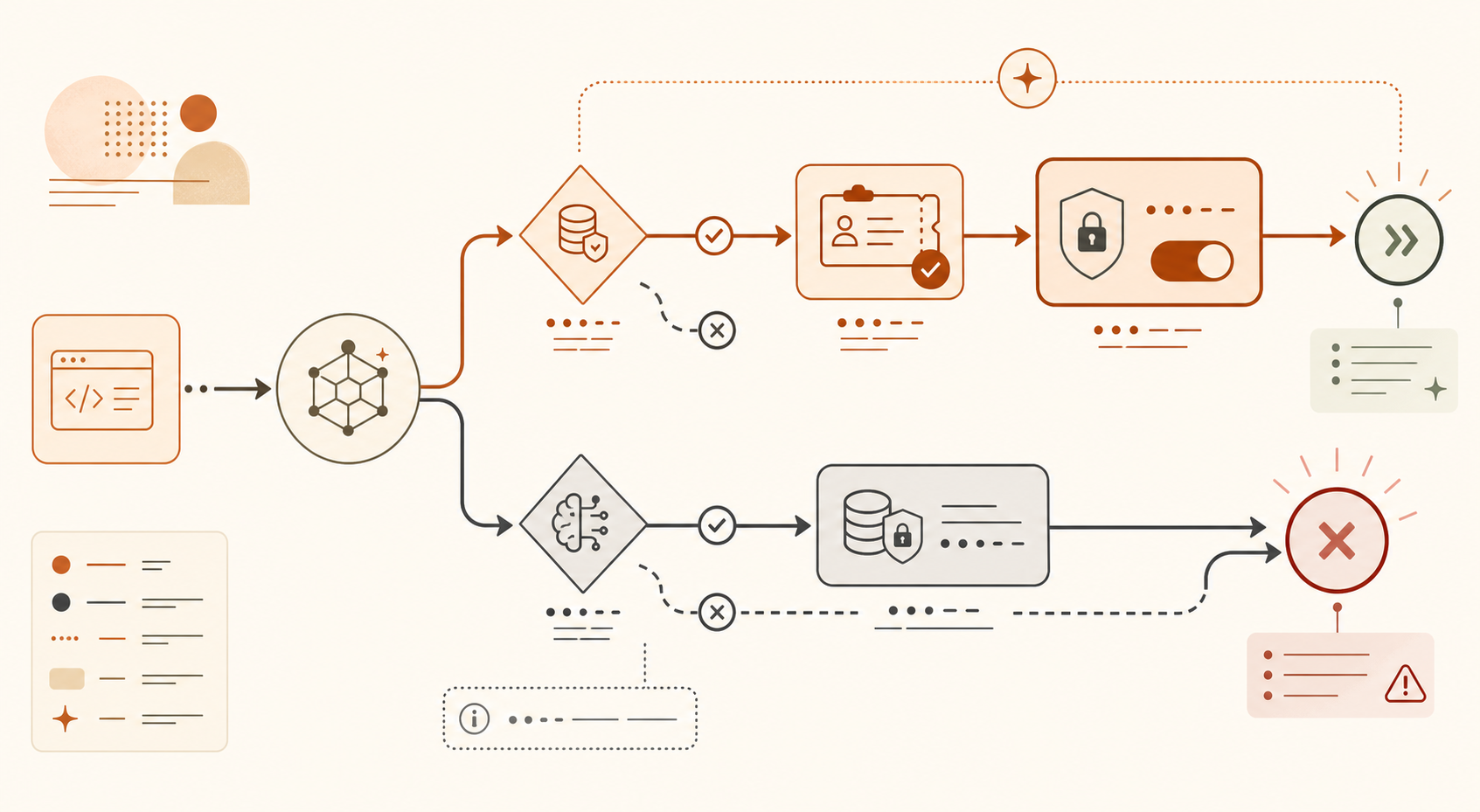
That means your AI gateway needs to understand model IDs as policy objects. global.anthropic.claude-fable-5 should not sit in the same allowlist bucket as Sonnet, Haiku, or Opus. It needs a separate risk label, separate routing rules, separate logging, and probably a separate approval path.
A sane enterprise policy now looks like this:
- Default developers to non-Covered Models for ordinary coding and support tasks.
- Put Fable/Mythos-class models behind explicit project approval.
- Block prompts containing regulated data, secrets, customer identifiers, unreleased financials, or export-controlled material.
- Require a clean-room repo or synthetic fixture set for Fable coding-agent runs.
- Log every invocation with model ID, retention mode, data classification, business owner, and ticket.
- Add a kill switch that can disable Covered Models org-wide without waiting for every team to update code.
This is boring governance work. It is also what lets companies use powerful models without pretending a retained coding transcript is harmless.
The Real Tradeoff: Capability Now, Clean Boundaries Later
My position: AWS and Anthropic made the right call by making the retention tradeoff explicit, but Fable 5 should not be enabled by default in serious engineering environments.
The transparency is good. The product fit is narrower than the launch hype suggests.
If you are building a prototype, migrating an open-source codebase, analyzing public documents, or running a red-team-approved sandbox, Fable 5’s tradeoff may be reasonable once access returns. The model is expensive, but the relevant question is whether it finishes a long task with fewer human cycles. Anthropic claims Fable 5 leads more on longer, more complex work, and early customer anecdotes point to ambitious migrations and agentic coding runs (Anthropic).
If you are working on a bank’s transaction engine, a medical records pipeline, a government contractor repository, unreleased chip design, customer support exports, or a production incident involving secrets, the default answer should be no. Not “no forever.” No until legal, security, and the data owner accept the new processor and retention path.
This is where teams need to stop outsourcing judgment to cloud-brand trust. Bedrock is not a magic privacy envelope. It is a platform with model-specific exceptions. The exception is now attached to the frontier model everyone wants to try.
Anthropic’s June 12 suspension makes this even clearer. The same model that required 30-day safety retention was pulled because the U.S. government claimed national security concerns around a possible jailbreak, a claim Anthropic disputes (Anthropic). That sequence should sober up every roadmap meeting. Frontier models are no longer just dependencies. They are volatile policy surfaces.
What Developer Teams Should Do This Week
Start with inventory. Search your code, notebooks, Terraform, and internal docs for Fable and Mythos model IDs. Then enforce policy at the gateway layer rather than trusting every SDK callsite.
If you use Bedrock, check whether provider_data_share has been enabled and who can change that setting. Treat it like a production data-egress control, not a model preference. If your organization has contractual ZDR commitments, assume Fable 5 is outside the approved path until counsel says otherwise.
For coding agents, create a “frontier-safe” workspace: no secrets, no customer data, no private incident logs, no proprietary datasets unless explicitly approved. Give the model a narrow task bundle, not your whole monorepo plus Slack export plus database console.
For procurement, update the questionnaire. Ask model providers and cloud platforms these questions per model class:
- Are prompts and outputs retained? For how long?
- Who stores them, the cloud provider or the model provider?
- Can humans review them? Under what triggers?
- Are they used for training, safety tuning, classifier evaluation, or abuse detection?
- What audit logs can the customer see?
- What happens under legal hold, safety investigation, or government order?
- Can the customer disable the model org-wide?
The Fable 5 launch did not make Bedrock bad. It made lazy Bedrock governance obsolete.
That is the useful lesson. The future will have more models like this: very capable, expensive, monitored, and wrapped in special terms. The winners will not be the teams that ban all of them or blindly enable all of them. The winners will be the teams that route work by sensitivity, prove where data went, and reserve frontier capability for tasks worth the governance cost.
If you want to try Claude Fable 5.1 yourself, you can reach it through Claude Fable 5.1 through RouteMux — a drop-in endpoint at 72% below Anthropic’s official pricing. Add a balance and get a key; whatever you don’t spend is refundable.
Further reading: Getting started with Claude Fable 5.